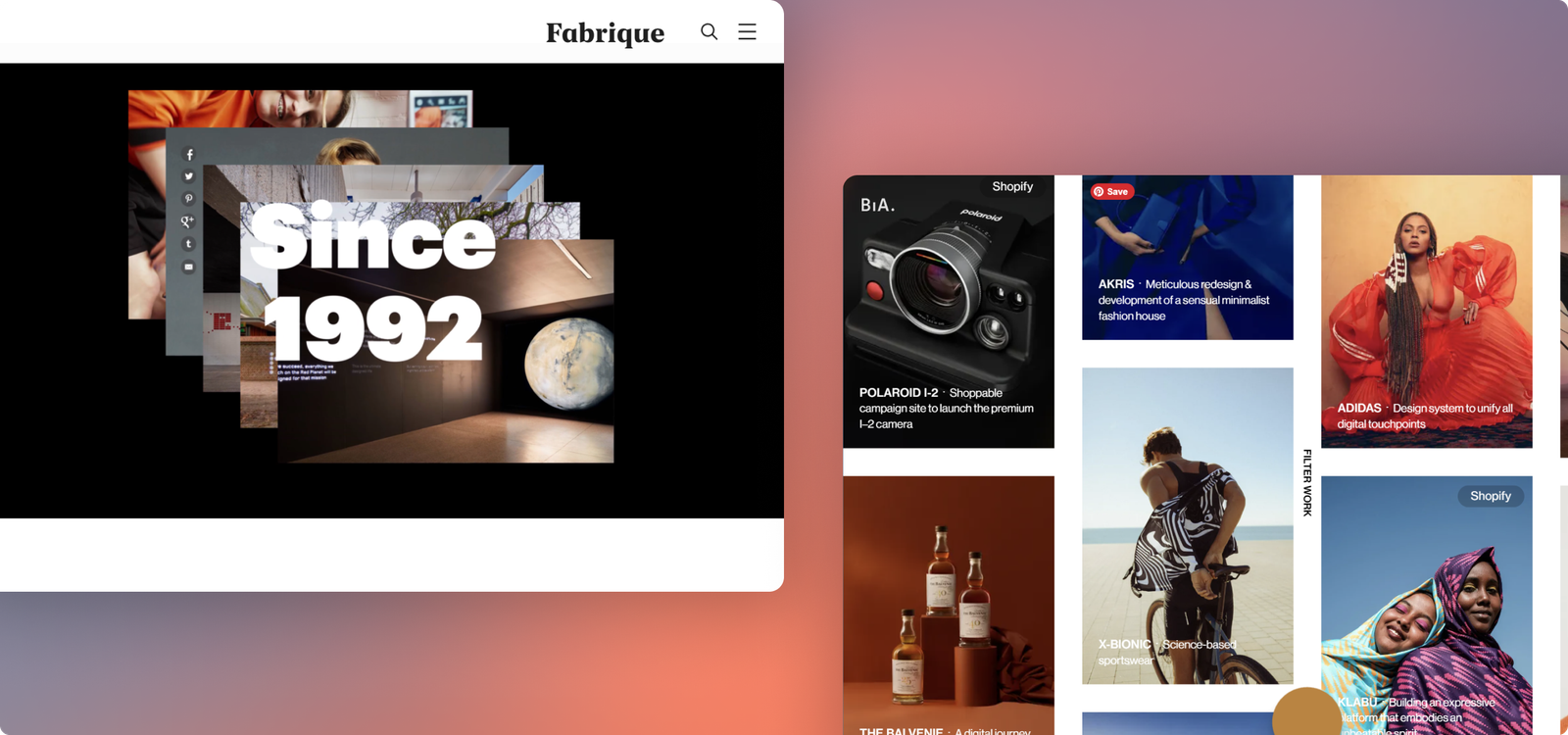
SaaSInsightBrowse reviews
Back to all rankings
Web designUpdated August 2026

Best Web Design Agencies in 2026

Key takeaways

  • Clay leads this list, with fifteen named clients including Slack, Google and Stripe and a €40,000 floor it publishes itself.

  • Ustwo brings 22 years across regulated sectors, Build in Amsterdam holds the only awards record we verified independently, Metalab the longest product record, and Halo Lab opens at $10,000.

We ranked these studios against six weighted criteria: client evidence at 35 percent, craft depth and range at 20, commercial transparency at 20, independent recognition at 10, tenure at 10 and documented outcomes at 5. Every award claim was verified on the awarding body's own page or the agency's own announcement, never on another ranking. Pricing is graded by provenance: tier 1 is published by the agency on its own site and earns full credit, tier 2 is self-declared on a named third-party profile and is attributed where we use it, and tier 3 is our own estimate or a figure our own research contradicts, which scores zero and is never printed as the agency's price. We correct factual errors, add awards once verified, and update pricing when an agency publishes it, but we do not change placement on request. Paid consideration is labelled on the entry and never affects position. Read the full method. No entry on this list is a paid placement.

Hiring a web design studio is mostly a comparison problem. Fifteen firms will show you fifteen convincing portfolios, and almost nothing on those sites tells you which of them can do your particular job, what they will charge, or whether anyone outside the studio has ever assessed the work.

This page ranks the field on evidence you can check yourself in a few minutes, says plainly who publishes a price and who does not, and ends by routing you to a studio by budget and by the kind of site you need.

This ranking is global. The studios below are based across Europe and North America, and several of the strongest are not American at all. If your shortlist has to be US-based, we rank the best web design agencies in the US separately.

How this list was built

We hold seventy-two web design studios in our directory. This page ranks the ones whose record supports a placement, against six weighted criteria, and shows you the record so you can disagree with the conclusion.

Broad web design rankings have a structural problem: most are published either by an agency that appears on its own list, or by a review directory where placement moves with review volume and sponsorship. What almost none of them do is publish a budget band and a real limitation for every entry. That is what this page is.

How we ranked these

  • Client evidence · 35% · Named, checkable work for companies you can look up
  • Craft depth and range · 20% · What the studio is actually deep in, and how far that reaches
  • Commercial transparency · 20% · Whether a budget band or rate is published, and where it came from
  • Independent recognition · 10% · Awards verified on the awarding body's own page or the agency's own announcement
  • Tenure · 10% · Years operating, where the studio states them
  • Documented outcomes · 5% · Published, attributable client results

Client evidence carries the most weight because it is the only criterion that discriminates across the whole field. Every firm here has some, no two have the same amount, and you can check all of it in an afternoon. We publish no per-agency scores.

What these fifteen publish

The most useful thing to know before you start calling, because it is where the field separates.

  • A price on their own site · Halo Lab from $10,000, Bakken & Bæck and Fabrique from $25,000, Ramotion from €30,000, Clay and ustwo from €40,000, Metalab and DEPT from €50,000. Focus Lab publishes a full five-band ladder rather than a floor, which is the clearest map of this market anyone here gives you.
  • Nothing usable on price · Base Design, Athletics, North Kingdom and Sparkbox. Build in Amsterdam and Sanctuary Computer publish something other than a price.
  • A verifiable award · Two of the fifteen, and one of those is a nomination rather than a win.
  • An attributable client outcome · None of them. If one shows you a conversion lift in a pitch, ask for the client's name and permission to call them.

Where a figure came from matters as much as the figure. Published by the agency on its own site earns full credit. Self-declared on a third-party profile is attributed wherever we use it. Our own estimate, or a figure our research contradicts, is never printed as an agency price, which is why several bands you will find elsewhere do not appear here.

How we check awards

Web design has no single authoritative awards programme. There is no equivalent of a platform running one uniform contest across the whole category, so recognition here is a patchwork of programmes with different entry costs, different judges and different appetites for the kind of work that never wins prizes.

We measure it against a closed list, printed here so you can check any claim we make:

Awwwards (Site of the Day, Month and Year), Webby, D&AD, One Show, FWA, Red Dot, Communication Arts, Fast Company Innovation by Design, and platform partner awards.

Every claim was verified on the awarding body's own page or the agency's own announcement.

What this does not measure

Awards require entry, so an absence of recognition is not evidence of weak work, and most of this list is ranked on client evidence alone.

More importantly, nothing on this page observes what actually goes wrong. Whether the timeline held. Whether the estimate held. Whether the site your team was handed can be edited by your team. Whether the senior people who won the pitch stayed on the project. None of that is visible in a portfolio, and across three years it will cost you more than the build price.

The 15 best web design agencies, ranked

  1. #01

    Clay

    San Francisco, USA
    Clay logo
    Year established
    2016
    Team size
    50–100
    Pricing model
    Project-based
    Hourly rate
    Not publicly disclosed
    Typical budget
    €40000+
    Notable clients
    Slack, Snapchat, Google, Meta, Stripe, Discover, Grayscale, Marqeta, Corsair, TeamViewer, Fiverr, Tipalti, Serena & Lily, STC Bank, Joe & The Juice
    Best for
    Technology-driven companies that want brand identity, digital product design, and web experiences developed as a single, cohesive system.

    About Clay

    Clay is a digital brand and UX design agency known for creating visually distinctive, product-driven brand experiences for technology companies. Their work sits at the intersection of brand identity and digital product design, often blurring the line between marketing websites, platforms, and core product experiences. Clay is particularly recognised for translating complex technology into clear, high-impact digital interfaces that feel modern, confident, and commercially sharp. Rather than treating brand and product as separate disciplines, Clay designs them as a unified system where visual identity, interaction design, and motion work together to shape perception and usability. This approach has made Clay a go-to partner for fast-growing startups and established tech companies that want their digital presence to feel premium, coherent, and future-ready.

    The €40,000 floor is the only price signal published, with no band above it, so a €60,000 brief and a €400,000 brief look alike from the outside. Worth establishing the range early.

    Featured work

    • CafePay

      For CafePay, Clay developed a complete brand identity and digital experience for a modern payments platform designed to simplify everyday transactions. The challenge was to create a brand that felt trustworthy and technically robust, while still being approachable for a broad consumer audience. Clay approached the project by aligning brand strategy with product experience, ensuring that visual identity, interface design, and interaction patterns worked together as a cohesive system. The result is a confident, contemporary brand expressed consistently across the product and marketing touchpoints. CafePay demonstrates Clay’s ability to build brands that live natively in digital environments, where clarity, usability, and visual distinctiveness are equally important.

      • Brand Strategy
      • Visual identity design
      • UX/UI Design
      • Digital Brand Systems
      • Motion & Interaction Design
    • Wealth

      For Wealth, Clay delivered a product-led brand identity and digital platform design for a fintech product focused on personal finance and investing. The challenge was to communicate credibility and simplicity in a category often associated with complexity and intimidation. Clay created a refined visual language and interface system that emphasises clarity, hierarchy, and ease of use. By tightly integrating brand expression with product design, the platform reinforces trust through interaction rather than messaging alone. The project highlights Clay’s strength in shaping brand perception through product experience where brand values are embedded directly into how the platform looks, feels, and behaves.

      • Brand Identity Design
      • Digital Product Design
      • UX/UI Design
      • Design Systems
      • Product-Led Brand Experience
  2. #02

    Ustwo

    London, UK

    Ustwo logo
    Year established
    2004
    Team size
    300–400
    Pricing model
    Mixed
    Hourly rate
    Not publicly disclosed
    Typical budget
    €40000+
    Notable clients
    BlackRock (iShares), HSBC, Google, Meta, National Grid, Ford, Jaguar Land Rover, Qantas, Peloton, Co-op, Lush, LEGO Foundation, Fresenius Medical Care, Samsung, SharkNinja
    Best for
    Product-led organisations that need human-centred digital products and brand experiences designed through usability, interaction, and service thinking.

    About Ustwo

    Ustwo is a global digital product studio known for designing products and experiences that balance usability, craft, and human-centred thinking. Their work often sits at the intersection of product, brand, and service design, helping organisations turn complex challenges into clear, intuitive digital experiences. Rather than positioning themselves as a traditional branding agency, ustwo approaches brand expression through product behaviour and interaction design. This makes them particularly effective for organisations where brand perception is shaped primarily through apps, platforms, and services rather than marketing-led touchpoints. With a strong culture of experimentation and social impact, ustwo frequently partners with both global brands and early-stage ventures to explore new ideas and build products that scale.

    The award most people associate with the name, the 2018 Monument Valley 2 Webby, belongs to ustwo games, a separate company. A twenty-two-year consultancy also brings process: discovery, research and service mapping before design, which suits a bank and may be more than a Series A company needs in eight weeks.

    Featured work

    • Samsung

      For Samsung, ustwo partnered on designing digital experiences that shape how users interact with the brand across devices and platforms. The challenge was to translate Samsung’s scale and technological ambition into interfaces that feel intuitive, human, and consistent despite the complexity of its product ecosystem. ustwo focused on interaction design, usability, and system-level thinking, ensuring that brand values such as innovation, reliability, and accessibility are expressed through everyday product behaviour. Rather than relying on overt visual branding, the work embeds brand perception into how products function and respond. This project highlights ustwo’s strength in delivering branding through experience where consistency and clarity across interactions define the brand more than static assets.

      • Brand Experience Design
      • UX/UI & Interaction Design
      • Design Systems
      • Product Experience Strategy
      • Digital Product Design
    • Peloton

      For Peloton, ustwo worked on enhancing the digital product experience that sits at the core of the brand’s relationship with its users. The challenge was to support a premium, motivational brand promise while designing experiences that scale across workouts, devices, and user journeys. Ustwo approached the project through service and product design, aligning interface decisions with Peloton’s tone, energy, and community-driven ethos. The resulting experience reinforces brand trust and emotional connection through usability, pacing, and interaction, not marketing language. This work demonstrates how ustwo helps brands express identity through behaviour, making product experience the primary carrier of brand value.

      • Product Experience Design
      • Service Design
      • UX/UI Design
      • Interaction Design
      • Product-Led Brand Expression
  3. #03

    Build in Amsterdam

    Amsterdam, Netherlands

    Build in Amsterdam logo
    Year established
    2014
    Team size
    30-50
    Pricing model
    Project-based
    Hourly rate
    €100–€160
    Typical budget
    €40,000 – €200,000+
    Notable clients
    Polaroid, adidas, Suitsupply, Vitra, Mammut, Moooi, Secrid, Ace & Tate, Mollie, Akris, Roger Vivier, The Balvenie, X-Bionic, Foam Museum
    Best for
    Consumer brands, lifestyle and retail companies, automotive and performance brands, eCommerce-led businesses

    About Build in Amsterdam

    Build in Amsterdam is a digital-first design studio founded in 2014 and based in Amsterdam. The studio is known for blending strong visual identity with product thinking, UX design, and eCommerce-focused digital experiences. Their work often sits at the intersection of brand, interface design, and technology. With a multidisciplinary team of designers, developers, and strategists, Build in Amsterdam partners with brands that care deeply about how design functions in real-world digital environments. Rather than treating branding and digital as separate disciplines, the studio approaches design as a system that must work cohesively across websites, products, and platforms. Build in Amsterdam is particularly well suited for brands that need design-led digital experiences, especially in commerce, lifestyle, and consumer-facing industries, where performance and aesthetics need to coexist.

    Its budget figure was entered on a third-party awards profile rather than published on its own site. The portfolio also leans consumer and commerce, so a B2B software company may find less comparable work than the award count suggests. Its about page and our record disagree on founding year and headcount, which we have not been able to resolve.

    Featured work

    • Polaroid

      Build in Amsterdam partnered with Polaroid to redesign and evolve its global eCommerce experience. The project focused on translating Polaroid’s iconic brand into a modern, digital-first platform that could support both storytelling and conversion. The studio developed a flexible design system that balanced nostalgia with contemporary usability, ensuring the site could scale across products, campaigns, and international markets.

      • Digital Brand Expansion
      • UX/UI Design
      • eCommerce Design
      • Design Systems
      • Art Direction
    • Alpine

      For Alpine, the high-performance automotive brand, Build in Amsterdam designed a digital experience that reflected speed, precision, and engineering excellence. The project focused on creating a visually striking yet highly usable interface that aligned with Alpine’s performance-driven identity. The work combined strong visual storytelling with structured UX, resulting in a digital platform that supported brand expression while remaining functional across devices.

      • Digital Experience
      • UX/UI Design
      • Visual Systems
      • art
      • Interaction Design
  4. #04

    Metalab

    Victoria, British Columbia, Canada

    Metalab logo
    Year established
    2006
    Team size
    100–150
    Pricing model
    Mixed
    Hourly rate
    Not publicly disclosed
    Typical budget
    €50000+
    Notable clients
    Slack, Uber, Coinbase, Instacart, Nike, Patreon, Upwork, Headspace
    Best for
    Product-led technology companies that need UX-driven design, robust design systems, and brand expression embedded directly into digital products.

    About Metalab

    MetaLab is a product design agency best known for shaping some of the world’s most widely used digital products. Their work is deeply rooted in product thinking, focusing on usability, clarity, and scalability rather than surface-level aesthetics. MetaLab typically partners with product-driven companies at critical moments early growth, rapid scale, or platform maturity where design decisions have long-term structural impact. Rather than separating brand and product, MetaLab treats them as tightly connected systems. Visual identity, interaction design, and product architecture are developed together to ensure consistency across user experience and brand perception. This approach has made MetaLab a trusted partner for technology companies building tools that must feel intuitive, durable, and credible over time.

    Eight named clients is a short list to check, and its own site names no awards. The €50,000 floor is a genuine floor: this is a product design studio, so a company that mainly needs a marketing site rebuilt should weigh whether that is what it is buying.

    Featured work

    • Uber

      For Uber, MetaLab partnered on the design of core product experiences used by millions of people worldwide. The challenge was to support rapid global scale while ensuring the product remained intuitive, trustworthy, and consistent across regions, use cases, and user types. MetaLab focused on refining interaction patterns, interface clarity, and system-level design decisions that shape how the Uber brand is experienced day to day. Rather than approaching branding as a visual exercise, the work embeds brand values, reliability, speed, and ease directly into product behaviour. This project exemplifies how brand perception can be built and sustained through product design at massive scale.

      • Product Experience Design
      • UX/UI Design
      • Design Systems
      • Interaction Design
      • Product-Led Brand Expression
    • Upwork

      For Upwork, MetaLab redesigned key parts of the platform to help communicate trust, professionalism, and clarity within a complex two-sided marketplace. The challenge was to improve usability for both freelancers and clients while reinforcing Upwork’s position as a credible, enterprise-ready platform. MetaLab approached the project through deep product thinking, aligning interface design, hierarchy, and interaction flows with Upwork’s brand promise. By simplifying workflows and strengthening consistency across the platform, the redesign improved both user confidence and brand perception. The work demonstrates MetaLab’s strength in delivering branding through product systems where experience, not messaging, defines the brand.

      • Product Strategy
      • UX/UI Design
      • Platform Design Systems
      • Interaction Design
      • Product-Driven Brand Experience
  5. #05

    Fabrique

    Utrecht, Netherlands

    Fabrique logo
    Year established
    1992
    Team size
    50–100
    Pricing model
    Project-based
    Hourly rate
    $120–$180 / hr (estimated)
    Typical budget
    $25,000+
    Notable clients
    Rijksmuseum, HEMA, Lowlands, GVB Amsterdam, AVROTROS, Swapfiets, Independer, Luxaflex, Vanderlande, Service Apotheek, Cultuurfonds, Museum Catharijneconvent, Sir Hotels, Source.ag
    Best for
    Cultural institutions, public-sector organisations, education platforms, and established organisations looking for brand clarity combined with strong digital and content-driven execution.

    About Fabrique

    Fabrique is a Netherlands-based branding and digital agency that works at the intersection of brand, content, and technology. With a strong foundation in both strategic thinking and digital execution, the agency helps organisations translate complex missions, stories, and structures into clear brand and digital experiences. Their work is particularly known for its emphasis on narrative clarity and usability. Fabrique often partners with institutions, cultural organisations, and knowledge-driven companies that operate in complex environments and need branding that informs, guides, and scales across digital platforms. Rather than focusing on surface-level aesthetics, the studio prioritises structure, storytelling, and coherence across brand touchpoints. Operating as a multidisciplinary team, Fabrique brings together brand strategists, designers, content specialists, and technologists. This integrated approach allows them to build brand systems that are not only visually strong but also deeply embedded in digital products and platforms, making their work durable and practical over time.

    The client list is heavily Dutch and institutional, so a US software company will find little directly comparable work and can expect a partner tuned to consensus decision-making rather than speed. Thirty-four years of public-sector work also sets expectations toward the considered rather than the visually adventurous.

    Featured work

    • Royal Academy of Dramatic Art (RADA)

      Fabrique partnered with the Royal Academy of Dramatic Art (RADA) to evolve the institution’s brand identity and digital presence, translating its heritage and academic authority into a contemporary, coherent system. The project focused on strengthening how RADA communicates its role as a leading drama school while ensuring the brand remains relevant to new generations of students and audiences. The work centred on developing a flexible visual identity and digital framework that could support a wide range of content, from academic programmes to performances and public engagement. Fabrique approached the project with an emphasis on clarity, structure, and narrative, allowing RADA’s voice and reputation to remain central while modernising its expression across platforms. The result is a refined brand system that balances tradition with modernity, supporting RADA’s positioning as a globally respected cultural institution with a strong digital presence.

      • Brand Identity
      • Visual Identity System
      • Digital Brand Expression
      • UX/UI Design
      • Web Design & Development
    • InsingerGilissen

      Fabrique worked with InsingerGilissen to develop a renewed brand identity that reflects the private bank’s positioning as a specialist, relationship-driven financial institution. The project focused on translating trust, craftsmanship, and long-term thinking into a clear and distinctive visual system. The work involved shaping a visual language that could communicate financial expertise without relying on generic industry cues. Fabrique designed an identity system that feels considered and understated, allowing the brand to stand out through restraint, consistency, and attention to detail across communication touchpoints. The resulting brand identity supports InsingerGilissen’s premium positioning while remaining flexible enough to work across digital platforms, client communications, and marketing materials. The system reinforces credibility and clarity in a traditionally conservative sector.

      • Brand Identity
      • Visual identity design
      • Brand System Development
      • Digital Brand Expression
      • Design Guidelines
  6. #06

    Ramotion

    San Francisco, USA

    Ramotion logo
    Year established
    2009
    Team size
    50–100
    Pricing model
    Project-based
    Hourly rate
    Not publicly disclosed
    Typical budget
    €30000+
    Notable clients
    Firefox, Salesforce, Clearbit, Turo, Descript, Stripe, Okta, Adobe, Island, Cellebrite
    Best for
    Product-led startups and technology companies that need strong visual identity and UX/UI design delivered as a unified, scalable system.

    About Ramotion

    Ramotion is a brand and product design agency that helps technology companies define their identity and translate it into digital products and platforms. Their work is highly execution-driven, combining brand strategy, visual identity, and UX/UI design into cohesive systems that scale across apps, websites, and marketing touchpoints. The agency is particularly known for its strong visual craft and system-oriented approach, making them a popular partner for fast-growing startups and product-led companies. Ramotion often works at moments of transition, launch, rebrand, or rapid growth where consistency between brand expression and product experience is critical. Their projects typically balance bold visual language with practical design systems that support long-term use and iteration.

    Its awards page lists Clutch and DesignRush directory badges and press mentions rather than awards from bodies we count, which is worth reading for what it is. It also does not commit to a founding year, saying only "over 15 years". The work is systems-led rather than expressive, which is deliberate, though it does mean the portfolio reads flatter than the client names imply.

    Featured work

    • Mozilla Firefox

      For Mozilla Firefox, Ramotion worked on a brand redesign aimed at modernising one of the world’s most recognisable open-source technology brands. The challenge was to refresh Firefox’s visual identity while preserving its values around openness, privacy, and accessibility without alienating an existing global user base. Ramotion developed a refined visual system that strengthened clarity, scalability, and consistency across digital touchpoints. The redesign focused on simplifying forms, improving recognisability at small sizes, and creating a flexible system that could adapt across products and platforms. This project demonstrates Ramotion’s ability to evolve established brands through thoughtful system design rather than surface-level aesthetic change.

      • Brand Identity Redesign
      • Visual System Development
      • Iconography & Logo Refinement
      • Digital Brand Guidelines
      • Creative Direction
    • OPPO

      For OPPO’s ColorOS 7, Ramotion designed a comprehensive iconography system for a mobile operating system used by millions of users worldwide. The challenge was to create an icon set that felt contemporary and expressive while remaining highly functional across devices, resolutions, and contexts. Ramotion approached the project by developing a cohesive icon system grounded in consistency, clarity, and scalability. Each icon was designed as part of a broader visual language, reinforcing the ColorOS brand through everyday user interactions. This work highlights Ramotion’s strength in branding through detail where consistent micro-design decisions play a critical role in shaping brand perception at scale.

      • Brand Visual Language Development
      • Iconography System Design
      • UI & Interaction Design Support
      • Design System Components
      • Creative Direction
  7. #07

    Bakken & Bæck

    Oslo, Norway

    Bakken & Bæck logo
    Year established
    2011
    Team size
    50–100
    Pricing model
    Project-based
    Hourly rate
    $150–$199 / hr (estimated)
    Typical budget
    $25,000+
    Notable clients
    Sierra, IKEA, Google DeepMind, Phantom, Sanity, Ramp, Legora, CoinTracker, World Labs, Lassie
    Best for
    Startups and scale-ups with digital products, SaaS and app-based businesses, fintech and health tech companies, teams that want brand and product design tightly integrated

    About Bakken & Bæck

    Bakken & Bæck is a digital-first design studio known for blending strong brand thinking with deep product and UX expertise. Founded in Norway and now operating across Europe, the studio has built a reputation for working closely with startups and scale-ups to shape brands that live primarily through digital products. Unlike traditional branding agencies, Bakken & Bæck approaches brand as something experienced through interfaces, interactions, and systems, not just logos and visuals. Their work often begins with product strategy and user experience, then extends naturally into brand identity and visual language. This makes them especially well-suited for early-stage and growth-stage companies where product and brand need to evolve together. The studio operates with small, senior-led teams and a highly collaborative process. Projects tend to be thoughtful, research-driven, and built for long-term scalability rather than surface-level polish.

    A client list weighted toward well-funded technology companies is a limited guide to how it handles a constrained budget. Oslo-based with a European centre of gravity, so a US buyer should confirm overlap hours early.

    Featured work

    • IKEA Studio

      Bakken & Bæck developed the brand identity and creative system for IKEA Studio, an experimental IKEA platform focused on exploring future living, design research, and conceptual ideas. The work centred on creating a distinct visual language that could exist alongside IKEA’s core brand while still feeling clearly connected to it. The identity was designed to be flexible and expressive, supporting storytelling, research outputs, exhibitions, and concept-led content across both digital and physical environments. Rather than a commercial brand system, the work positioned IKEA Studio as an exploratory space allowing ideas, prototypes, and narratives to be communicated with clarity and consistency.

      • Brand Identity Design
      • Visual Identity System
      • Creative Direction
      • Brand Experience Design
      • Design Systems
      • Digital Brand Expression
      • Exhibition & Concept Communication Design
    • CoinTracker

      For CoinTracker, Bakken & Bæck worked on shaping the brand identity and visual system for a crypto portfolio tracking and tax platform operating in a complex financial space. The challenge was to bring clarity and trust to a product dealing with highly technical and often intimidating subject matter. The branding focused on creating a clean, structured visual system that could scale across product, web, and marketing touchpoints. The result was a brand that balances crypto-native credibility with more traditional financial cues, helping CoinTracker communicate reliability, transparency, and ease of use as the platform grew.

      • Brand Identity Design
      • Visual Identity System
      • Brand System Design
      • Creative Direction
      • Digital Brand Design
      • Digital Brand Expression
  8. #08

    Sanctuary Computer

    Brooklyn, New York, USA

    Sanctuary Computer logo
    Year established
    2015
    Team size
    11–50
    Pricing model
    Mixed
    Hourly rate
    $175 – $295/hr
    Notable clients
    Stripe, Figma, Mozilla, Nike, Pinterest, Etsy, Dropbox, IBM, Replit, Brooklyn Museum
    Best for
    Mission driven startups, cultural institutions and internal teams at large organisations that want senior engineering without committing to a fixed scope up front.

    About Sanctuary Computer

    The commercial terms are the standout. The studio states that it bills in arrears for work already done and that contracts carry no minimum commitment, which is close to the opposite of the quarterly floor Sparkbox sets. For a buyer who wants senior engineering without a large up front commitment, that is a genuinely differentiating term and worth quoting directly.

    The client list is the strongest in this batch: Stripe, Figma, Mozilla, Nike, Pinterest, Etsy, Dropbox and IBM alongside cultural institutions including the Brooklyn Museum and the ACLU. Stated audience is mission driven startups, cultural institutions and elite teams inside large organisations.

    Capability is broad and technical, extending past web into IoT, embedded software and AI and LLM work. Stated sectors are AI, fintech and crypto, healthcare and IoT. The site does not explicitly state a headquarters city, so `location` is blank rather than guessed; New York is strongly implied by other references and needs confirming.

    No minimum commitment and billing in arrears makes this an hourly relationship rather than a fixed-price project, and with no rate on its site the engagement is hard to size before a conversation. It states no location on its site either.

    Featured work

    • Stripe Apps

      Brand design, product design, art direction and campaign strategy for Stripe's apps marketplace, covering the install flow and in-Dashboard surfaces as well as the launch campaign. They delivered a modular asset toolkit that Stripe and its marketplace partners could both use, which is the harder brief: a system other teams operate, not a one-off launch.

      • Product design
      • Brand design
      • Design system
    • Harvey

      Front-end rebuild of the marketing site for the legal AI company, in Next.js, TypeScript and Sanity CMS — platform pages, solutions content, a searchable blog, testimonial modules, careers, shared navigation and motion work across the site. Harvey then kept them on as an ongoing development partner for new content verticals, campaign pages and performance work, which is a signal about how the engagement held up after launch.

      • Next.js
      • Sanity
      • Engineering
    • Brooklyn Museum

      Rebuilt the museum's digital platform on Sanity, consolidating a legacy CMS, a collections database, a digital asset manager, a ticketing platform and an ecommerce shop into one system covering 100,000+ artworks, with an ElasticSearch index across all content types and rebuilt ticketing and commerce. Design was with sibling studio XXIX. This is the strongest evidence of data migration and integration at scale, not just front-end work.

      • Sanity
      • Search
      • Data migration
  9. #09

    Base Design

    Brussels, Belgium

    Base Design logo
    Year established
    1993
    Team size
    50–100
    Pricing model
    Project-based
    Hourly rate
    Not publicly disclosed
    Typical budget
    Mid-range to large branding budgets
    Notable clients
    Apple, Uber, Coca-Cola, McDonald's, UNIQLO, UNICEF, DoorDash, Dior, Fondation Louis Vuitton, Kickstarter, MoMA, The New York Times
    Best for
    Cultural institutions, luxury brands, fashion, hospitality, creative organisations, corporations seeking a refined identity system

    About Base Design

    Founded in 1993, Base Design is an international branding studio known for concept-driven design and strategically informed visual identity systems. With offices in Brussels, New York, and Geneva, the studio blends European design sensibility with global commercial reach. Base works with cultural institutions, luxury brands, tech companies, and corporate organisations, helping them clarify their positioning and create strong, personality-rich visual languages. Their multidisciplinary approach spans strategy, identity, digital experience, and communication design always rooted in thoughtful creative direction.

    "Mid-range to large branding budgets" is a sentence rather than a number, so it gives little to plan against beyond a rough sense of scale. Digital also sits downstream of the identity work rather than at the centre of the practice, so if what you need is a website rebuilt and measured, it is worth checking how that side would be resourced.

    Featured work

    • MoMA Design Store

      Base developed a sophisticated, modern brand identity for the MoMA Design Store, reflecting the museum’s global cultural influence through refined type, layout, and merchandising systems.

      • Brand Identity
      • Art Direction
    • Milk Studios

      The studio created a bold identity system for Milk Studios, a cultural hub in New York and Los Angeles, capturing its energy across digital, spatial, and communication materials.

      • Brand Identity
  10. #10

    Halo Lab

    Ukraine

    Halo Lab logo
    Year established
    2013
    Team size
    50–100
    Pricing model
    Project-based
    Hourly rate
    $50 – $99 / hr
    Typical budget
    Starts at $10,000
    Notable clients
    Kinetik, Mighty Buildings, Nyra Health, Pluto, ZoomSphere, WeSpire, HomeQ, Omnibuds, Petspan, Vixiv
    Best for
    Startups and SaaS companies, product teams, businesses needing UI/UX and branding support, companies building web or mobile applications

    About Halo Lab

    Halo Lab is a full-service digital design agency focused on UI/UX, branding, and product design, with a strong emphasis on creating visually polished and user-centric digital experiences. Unlike Webflow-specialist studios, Halo Lab operates more broadly across platforms, supporting both websites and product interfaces. Their work is characterised by clean visual systems, modern UI patterns, and a strong focus on usability, making them a reliable choice for companies building or refining digital products. The team often works with startups and SaaS companies, helping translate complex ideas into intuitive, well-structured interfaces. Halo Lab is best suited for teams that need a design-first partner across both product and marketing touchpoints, especially when consistency between brand, website, and application UI is a priority.

    The named clients are real companies but not ones a sceptical stakeholder will recognise, so the list offers less to check than its length suggests. A $10,000 floor buys a specific scope, so get exactly what is in it in writing.

    Featured work

    • Omnibuds

      For Omnibuds, Halo Lab designed a clean and modern digital experience focused on showcasing an audio-based product platform. The project emphasised intuitive UI patterns, clear content hierarchy, and a visually engaging interface that highlights product features without overwhelming the user. The work demonstrates Halo Lab’s ability to create polished, user-friendly product experiences that balance aesthetics with usability.

      • UI/UX Design
      • Web Design
      • Digital Product Design
      • Visual Design
      • Interaction Design
    • Petspan

      For Petspan, Halo Lab created a cohesive digital experience that combines branding and product interface design for a pet services platform. The project focused on building a friendly, approachable visual identity alongside a structured and easy-to-navigate user interface. The result is a well-balanced design system that supports both brand personality and functional usability, highlighting Halo Lab’s strength in designing for consumer-facing digital products.

      • Branding
      • UI/UX Design
      • Digital Product Design
      • Web Design
      • Design Systems
  11. #11

    DEPT

    Amsterdam, Netherlands

    DEPT logo
    Year established
    2015
    Team size
    4,000+ employees globally
    Pricing model
    Mixed
    Hourly rate
    Not publicly disclosed
    Typical budget
    €50000+
    Notable clients
    eBay, NVIDIA, Meta, Arm
    Best for
    Scaleups and enterprise organisations that need branding tightly integrated with digital products, platforms, and performance-driven growth.

    About DEPT

    DEPT® is a global digital agency that combines brand, technology, marketing, and data to help companies grow in an increasingly complex digital landscape. Headquartered in Amsterdam, DEPT operates across multiple international studios, bringing together strategists, designers, engineers, and marketers under one integrated model. Unlike traditional branding agencies, DEPT approaches brand building as part of a broader digital ecosystem, connecting identity, experience design, performance, and technology into a single, cohesive system. This makes them particularly effective for organisations where brand expression must work seamlessly across platforms, products, and channels. Known for their executional depth and operational scale, DEPT is frequently engaged by high-growth companies and global enterprises looking to align brand ambition with digital performance and long-term scalability.

    The Carlyle Group has been majority shareholder since 2020, confirmed on Carlyle's own release, and DEPT's site does not mention it. Private equity ownership can shape pricing and account continuity, so it is worth knowing who you are contracting with. Four named clients is also modest at this headcount, so ask to meet the team that would actually do the work.

    Featured work

    • JBL × Amazon

      For JBL, DEPT partnered with Amazon to create an immersive digital brand experience that brought JBL’s product ecosystem to life across voice-enabled and e-commerce touchpoints. The challenge was to translate a highly physical, performance-driven audio brand into an engaging digital environment that felt intuitive, premium, and unmistakably JBL. DEPT focused on experience design that connected product storytelling with usability, ensuring that interaction, motion, and interface design worked together as a cohesive system. The result was a brand-led digital experience that strengthened product discovery while maintaining consistency across platforms. The project demonstrates DEPT’s strength in merging brand expression with functional digital design at scale.

      • Experience Design
      • Digital Product Design
      • UX/UI Design
      • Creative Direction
      • Brand Experience Design
    • Coca-Cola

      For Coca-Cola, DEPT delivered a digital brand experience designed to support one of the world’s most recognisable brands in a modern, digitally driven context. The brief required balancing Coca-Cola’s global brand equity with fresh, interactive execution that could engage audiences across digital platforms without diluting its core identity. DEPT developed a design approach that prioritised clarity, motion, and interaction, allowing the brand to express its personality through experience rather than static assets. By integrating storytelling with digital usability, the work reinforced Coca-Cola’s relevance in contemporary digital culture while staying rooted in its established brand framework. This project highlights DEPT’s ability to execute high-visibility brand experiences for global enterprises.

      • Digital Experience Design
      • Brand Activation
      • Creative Concept Development
      • UX/UI Design
      • Campaign design
  12. #12

    Focus Lab

    Remote, USA

    Focus Lab logo
    Year established
    2010
    Team size
    10–49
    Pricing model
    Mixed
    Typical budget
    Project budgets banded from under $30,000 to $250,000 and up, plus a monthly retainer option
    Notable clients
    Zuora, Salesoft, Fabricators & Manufacturers Association
    Best for
    B2B and SaaS companies that have outgrown their original identity and need brand strategy and visual identity rebuilt together rather than a website refresh.

    About Focus Lab

    A rare thing in our current pool: an agency that is explicitly and only B2B. Positioning is brand identity and strategy for companies wanting to stand out as industry leaders, delivered by a stated mix of brand designers, strategists and writers.

    The pricing signal is unusually good for an agency site. The contact form exposes real budget bands running from under $30,000 up to $250,000 and above, alongside a monthly retainer option, which is enough to place it confidently for buyers with a stated budget. Copyright dates from 2010 and the site claims more than a decade of operation.

    Operating remotely across the US, with no single office stated. Team size is not stated, though the team page pictures more than thirty people. The B2B focus and the SaaS client work make this a strong candidate for the SaaS branding and B2B cuts.

    Three named clients is little to check for a sixteen-year-old firm; its site names Zuora, Salesoft and the Fabricators & Manufacturers Association. It is also brand strategy and identity rather than build, so a site that needs designing and shipping will involve a second firm and a handover to manage.

    Featured work

    • Braze

      Brand identity work for a customer-engagement platform that later went public. An example of Focus Lab operating at the scale where a rebrand has to survive an IPO-stage communications programme, not just a marketing site refresh.

      • Brand Strategy
      • Visual Identity
    • LaunchDarkly

      Brand and identity work for a developer-tools company. Shows the agency handling a technical, developer-facing audience where the identity has to read as credible to engineers rather than to a marketing buyer.

      • Brand Strategy
      • Visual Identity
      • Web Design
    • PolyAI

      Branding for a conversational-AI company. Representative of the newer AI-category work in their portfolio, where the brand has to differentiate in a crowded and fast-moving market rather than describe an established category.

      • Brand Strategy
      • Visual Identity
  13. #13

    Athletics

    Brooklyn, USA

    Athletics logo
    Year established
    2004
    Team size
    31
    Notable clients
    Salesforce, Nike, MoMA, Google Chrome, IBM, Major League Soccer, Amazon Design, Citrix
    Best for
    Technology companies and cultural institutions that need an identity system rigorous enough to survive being handed to other teams.

    About Athletics

    A focused brand studio with a deliberately short service list: brand strategy, identity systems, digital experiences and innovation work. The emphasis on identity systems rather than one off logo work is the useful distinction, and it suits buyers who need an identity that other teams can apply without the studio present.

    The client roster is strong and spans two quite different worlds, enterprise technology in Salesforce, IBM, Citrix and Google Chrome, and cultural institutions in MoMA, the New Museum and the Pulitzer Arts Foundation. Nike and Major League Soccer add consumer sport.

    Confirmed at 210 N. 6th Street in Brooklyn, New York. Founding year, team size and pricing are not stated anywhere on the site, and no sector focus is declared, so size and budget fit need establishing before a top placement.

    It publishes no founding year or team size, so there is little to compare before a call and the first conversation is likely to be qualification rather than scoping. The 2004 founding year in our record comes from our own research rather than from the studio.

    Featured work

    • Seattle Sounders FC — 50th anniversary brand platform

      Athletics ran stakeholder interviews, focus groups and a quantitative survey (with DNA Seattle) before writing the club's positioning, 'At the Water's Edge', and four guiding principles. The output was a strategy and narrative platform plus design direction rather than a finished identity alone. It shows the studio can take a research-led route through a rebrand where a large, opinionated fanbase has to be carried along with the decision.

      • Brand Strategy
      • Research
      • Sports
    • Okta — brand evolution and the 'Aura' symbol

      A rebrand covering wordmark refinement, a new brand symbol, motion and video direction, an animated toolkit, environmental and exhibition design, and brand voice. The work was launched publicly at Okta's Oktane '22 conference with large-format applications. Evidence that Athletics can deliver an enterprise identity system with the motion and environmental assets an in-house team needs to run it afterwards, not just a logo file.

      • Identity Systems
      • Motion
      • B2B Software
    • Soccer.com — 'Everything Soccer' campaign system

      Rather than a fixed-run campaign, Athletics built a campaign identity, colour system, headline and copy constructs, and asset templates that Soccer.com's own team can extend across digital, CTV, out-of-home and print. The work also fed back into the brand's website. Useful for a buyer who wants tooling their marketing team can operate, rather than a set of finished executions with a shelf life.

      • Campaign
      • Brand Voice
      • Retail
  14. #14

    Sparkbox

    Bellbrook, USA

    Sparkbox logo
    Year established
    2009
    Team size
    20
    Pricing model
    Retainer
    Hourly rate
    $150 – $199/hr
    Typical budget
    $150,000 to $250,000 per quarter for a team of two to four
    Notable clients
    Stanford University, University of Georgia, PSA Airlines, Knoxville Utilities Board, National Kidney Foundation, Oklahoma City Thunder, Shoes For Crews
    Best for
    Organisations with an in house team that needs senior front end and design systems capacity added to it, and a budget that can carry a quarterly commitment.

    About Sparkbox

    The clearest pricing disclosure of any agency in this batch, and it defines the firm. Engagements are stated as a team of two to four people at an investment of $150,000 to $250,000 per quarter, with flexibility on structure. That is a rolling capacity model, not project work, and it sets a real floor: this is not a firm for a one off marketing site.

    Design systems and standards based development are the stated specialisms, which fits the embedded team model. Roughly twenty people are listed across leadership, client success, experience design, production and operations.

    The site states no headquarters, founding year, client names or sector focus, so `location` is blank rather than guessed and needs confirming before this record is used in a US filtered list.

    The embedded model assumes you already have a team, a backlog and someone to direct the work. Seven named clients concentrated in education and nonprofits is a narrow base for a commercial buyer to check.

    Featured work

    • University of Georgia design system

      Sparkbox audited 75 existing components for UGA's Office of Online Learning and rebuilt them as a platform-agnostic library on Drizzle, with usage guidelines and an in-person training session for early adopters. The system was then picked up by Franklin College across 30+ academic departments and 100+ sites, which shows the output was durable enough for other teams to run without Sparkbox. The published system is browsable, so a buyer can inspect the component quality and documentation standard directly.

      • Design Systems
      • WordPress
      • Accessibility
    • Described and Captioned Media Program

      A Ruby on Rails rebuild of DCMP.org for an audience of students with disabilities, covering the site, a component-based design system, a Video Lesson Builder tool with quizzing and grading, and native streaming apps for Roku and tvOS. This is the clearest evidence that Sparkbox handles accessibility as an engineering requirement rather than a checklist, and that it can extend beyond the browser when the audience needs it.

      • Ruby on Rails
      • Design Systems
      • Accessibility
      • Roku/tvOS
    • Knoxville Utilities Board

      A responsive rebuild for a utility serving 400,000+ residents, spanning an ExpressionEngine CMS, EmberJS customer applications and a shared design system so both stacks look like one product. Sparkbox reports a 40% load-time reduction and a speed index cut by more than half, and built a Storm Mode for outage conditions. The engagement demonstrates comfort with mixed legacy stacks and operational edge cases, not just greenfield marketing sites.

      • ExpressionEngine
      • EmberJS
      • Design Systems
      • Performance
  15. #15

    North Kingdom

    Stockholm, Sweden

    North Kingdom logo
    Year established
    2011
    Team size
    40-70
    Pricing model
    Project-based
    Hourly rate
    €120–€180 per hour
    Typical budget
    €60,000 – €300,000+
    Notable clients
    Google, Electronic Arts, Riot Games, Supercell, 10 Chambers, Norwegian Armed Forces Museum
    Best for
    Cultural institutions, global brands, technology-forward organisations, projects requiring immersive storytelling

    About North Kingdom

    North Kingdom is a digital experience design studio founded in 2011, with roots in Sweden and offices across Europe and North America. The studio is best known for creating immersive, interactive digital experiences that blend storytelling, technology, and design. Rather than focusing on traditional branding or marketing outputs, North Kingdom specialises in experience-led work. Their projects often explore how brands can use the web, interaction, and emerging technologies to tell deeper stories and engage audiences in more meaningful ways. With a strong emphasis on craft, experimentation, and narrative, North Kingdom partners with cultural institutions, global brands, and forward-thinking organisations that want to push beyond conventional digital formats. Their work frequently sits at the intersection of design, engineering, and creative technology.

    Six named clients, concentrated in gaming and entertainment, so a B2B or commerce buyer will find little comparable work. Its own site and our record also disagree on how long the studio has existed, by about eight years, which we have not resolved.

    Featured work

    • 400 Years Alive

      North Kingdom collaborated with the Swedish National Heritage Board to create 400 Years Alive, an interactive digital experience marking the anniversary of Stockholm becoming Sweden’s capital. The project combined historical storytelling with modern interaction design, allowing users to explore centuries of history through a rich, immersive interface. The experience was designed to feel alive and exploratory, encouraging discovery rather than linear consumption.

      • Concept development
      • Interactive Experience Design
      • UX/UI Design
      • Creative Technology
      • Storytelling & Content
    • Creators

      For Creators, North Kingdom designed an interactive digital platform celebrating creativity and creative communities. The project focused on showcasing stories, perspectives, and ideas through a highly visual and interactive web experience. The studio used motion, layout, and interaction to create a sense of depth and engagement, reinforcing the idea of creativity as an active, evolving process rather than static content.

      • Digital Experience
      • UX/UI Design
      • Interaction Design
      • Visual Design
      • Motion & Animation
      • Front-end creative direction

How to choose the right one for you

This ranking answers which studios are strongest against our criteria. It does not answer which one is right for your project, and for most readers those are different names. Route by your hardest constraint.

By budget

  • $10,000 to $25,000. Halo Lab is the only firm here that genuinely operates at this level, at a $10,000 floor and $50 to $99 per hour, both published on its own site. Below $10,000, nothing on this page is a realistic option.
  • $25,000 to $50,000. The widest choice. Bakken & Bæck and Fabrique from $25,000, Ramotion from €30,000, Clay and ustwo from €40,000. Focus Lab's lowest band is under $30,000.
  • $50,000 and up. Metalab and DEPT publish €50,000 floors. Build in Amsterdam self-declares $50,000 to $100,000 on its Awwwards profile. Focus Lab's published bands run to $250,000 and up, which is the clearest map of the top of this market anyone on this page gives you.
  • Monthly rather than a project. Sanctuary Computer states no minimum commitment and bills in arrears. Sparkbox sells embedded capacity by the quarter. Focus Lab offers a retainer option.
  • If you need a number before the first call. Focus Lab, without question. Five bands on its own contact form, which nobody else here matches.

Ask for a range in your first email rather than discovering it in the third meeting.

By what the project actually is

  • A product, not a marketing site. Metalab first, then Sanctuary Computer if engineering has to come with it.
  • A brand and a site as one piece of work. Clay, or Bakken & Bæck at an earlier stage.
  • A brand identity your own team will apply afterwards. Athletics, which builds systems for handover, then Ramotion for the design system depth.
  • A commerce flagship that has to look like the best in its category. Build in Amsterdam, and nothing else here is close.
  • A service, not a page. ustwo, which does service design as a discipline rather than as a discovery phase.
  • An identity that has to survive contact with a real product interface. Ramotion.
  • An interactive experience or a launch moment. North Kingdom.
  • A positioning problem you have mistaken for a website problem. Focus Lab.

By who you are

  • An AI or frontier technology company. Bakken & Bæck, on the evidence: Google DeepMind, Sierra and World Labs.
  • A funded B2B software company. Clay for brand and product together, Focus Lab if the problem is positioning.
  • A museum, university, transport authority or public body. Fabrique, or Base Design if the work is cultural and identity-led.
  • A global brand needing many markets at once. DEPT, and read the ownership disclosure on its entry first.
  • An in-house team that needs capacity, not a vendor. Sparkbox.
  • A regulated organisation, finance or health. ustwo.
  • A first real site on a five-figure total budget. Halo Lab.

If your build platform is already decided

If you have settled on Webflow, this is the wrong page. No Webflow specialist is ranked here, on purpose, because we rank fifteen of them on best Webflow agencies against Webflow's own awards and partner tiers. Start there instead.

The question worth asking whoever you shortlist

Ask them to name the last project that went wrong, and what they changed afterwards.

Every studio on this page can describe its process and show you work it is proud of. What separates them is what happens when the estimate slips, the stakeholder changes their mind in week nine, or the thing they designed turns out not to work. A studio that answers that question specifically has been through it and learned something. One that says it has not had a project go wrong is either new or not telling you the truth, and no portfolio on earth will show you the difference.

Frequently asked questions

Who are the best web design agencies?

On our weighted criteria, Clay ranks first. It carries the deepest client list in our pool, fifteen named companies including Slack, Snapchat, Google, Meta and Stripe, it publishes a €40,000 project floor on its own site, and it runs brand identity and product design as one system. Ustwo is second on twenty-two years of range across regulated and consumer sectors, and Build in Amsterdam third, holding the only awards record we could verify twice, 41 Awwwards Sites of the Day and 6 Webby Awards. For a specific project the strongest studio is often not the right one. A $10,000 budget points to Halo Lab, a product rather than a marketing site to Metalab, an AI company to Bakken & Bæck, and a need to know the price before the first call to Focus Lab.

Who are the best web design agencies in the US?

Several of the strongest studios here are not American, so the honest answer names both. US-based or US-headquartered on this page: Clay in San Francisco, Metalab in Victoria, Canada with a largely US client base, Focus Lab as a remote US team, Sanctuary Computer and Athletics in New York, Ramotion in San Francisco, Sparkbox in Ohio, and Base Design with a New York office alongside Brussels and Geneva. Clay is the strongest of them on our criteria. Ustwo, Build in Amsterdam, Fabrique, Bakken & Bæck, North Kingdom and DEPT are European, and if timezone overlap is a hard constraint you should say so in the first email rather than assume it will work out.

How much does it cost to hire a web design agency?

Among the studios on this page that actually publish a figure on their own site, floors run from $10,000 at Halo Lab to €50,000 at Metalab and DEPT, with $25,000 to €40,000 being the common entry point. Focus Lab is the only firm here that publishes a full ladder rather than a floor: under $30,000, $30,000 to $50,000, $50,000 to $100,000, $100,000 to $250,000, and $250,000 and up. Treat that as the most reliable map of this market you will find, because it came from an agency rather than from a directory. Be careful with hourly rates you see quoted elsewhere. Many circulating figures were not published by the agency at all, and on this page we refuse to print any rate we could not source to the firm itself.

Which web design agencies are best for B2B and SaaS companies?

Clay first, on evidence: Slack, Snapchat, Stripe and Meta among fifteen named clients, and brand and product designed together, which is the shape most B2B software problems actually have. Metalab next if the real subject is the product rather than the website. Focus Lab if the underlying problem is positioning and messaging, since it does B2B brand strategy specifically and publishes bands you can size against a marketing budget. Ramotion if your brand and your product interface currently look like they came from two different companies. Bakken & Bæck if you are an AI company, where its Google DeepMind, Sierra and World Labs work is the most relevant evidence anyone here can show.

What is the difference between a web design agency, a branding studio and a product design studio?

They solve different problems and the labels are used loosely, which is how buyers end up hiring the wrong one. A branding studio starts with the idea and the identity system, and treats the website as one output of it: Base Design and Focus Lab work this way, and Focus Lab does not build the site at all. A product design studio designs the software people use repeatedly, where the interface is the thing rather than a route to it: Metalab and Sanctuary Computer. A web design agency designs and ships the site itself. The practical question to ask is who owns the build, because that is where the handover risk lives. If the studio designs but does not build, you are hiring a second firm and you own the seam between them.

Should I hire a web design agency or a Webflow specialist?

If you have already decided on Webflow, hire a Webflow specialist. A general design studio will draw something excellent and then hand it to a build partner you have to find and manage, and that seam is where budget and timeline go. If you have not decided on the platform, or the project is a product, a service or a brand system rather than a marketing site, start with a design studio. This page ranks no Webflow specialists on purpose, because we rank fifteen of them separately on [best Webflow agencies](/best-webflow-agencies) with Webflow's own awards and partner tiers as the recognition axis, which is a far stronger signal than anything available in general web design.

Why do so few web design agencies publish their pricing?

Partly because scope genuinely varies, and partly because a published floor loses them enquiries they would have talked into a bigger number. The consequence for you is that a great deal of the pricing you find online was not written by the agency. When we measured our own pool of seventy-two records, seven carried a numeric budget band that our own research says the agency does not publish anywhere, and several hourly rates turned out to be estimates we had made ourselves rather than figures anyone had stated. That is why every price on this page is labelled by provenance, and why any figure we could not source to the agency is left out rather than printed. If a directory shows you a rate for a studio and the studio's own site shows you nothing, believe the studio.

How do I check that an agency's awards are real?

Go to the awarding body's own site and search the winners archive, or find the agency's own announcement with a year and a category attached. Never accept an award claim you found on a ranking, including this one, without that check. Two things we hit while doing it are worth knowing. First, awards get attributed to the wrong company: the 2018 Webby for Monument Valley 2 belongs to ustwo games, not to ustwo the design consultancy, and it appears as ustwo's on other lists. Second, be sceptical of anything that names a body without a year, a category or a count, and of directory badges from review platforms, which are not awards at all. If a studio cannot tell you which year it won and in what category, treat the claim as decoration.

How long does a web design project take?

None of the studios on this page publishes a timeline, so we will not invent a range and attribute it to them. What we can tell you is what shifts it. A brand identity developed before the site adds months at the front. A service design or research phase, which ustwo and Fabrique treat as real work rather than a formality, adds more. A design system built for another team to apply, which is Athletics' specialism, takes longer than one built to be used once. Institutional and public-sector procurement, Fabrique's territory, can take longer than the design itself. Ask for the timeline in writing alongside the estimate, ask what has to be true for it to hold, and ask which of those things depends on you rather than on them.

What should I ask an agency before I sign anything?

Six questions, in this order. Who specifically will do the work, and will the senior people in this meeting be on it. What is the full budget range for what we have discussed, not the floor. What happens to the price and the date when scope changes, and who decides that it has. Who can edit the site afterwards, and what needs you. What was the last project that went wrong, and what did you change because of it. And can we speak to a client from two years ago rather than two months ago. The last one matters most and is refused most often. Anyone can produce a happy reference from a project that has not had time to age.

Popular alternatives

When the obvious choice stops fitting

See what teams switch to, and whether the move is actually worth making.

All alternatives
Website & CMS platformsUpdated 08 Sep

Contentful alternatives

Eight platforms that answer the same brief, ordered by how completely each one replaces what Contentful actually does for you. Which is rarely the whole of it.

AI search visibilityUpdated 24 Aug

Profound alternatives

Nine alternatives ranked by the Profound limit that sent you looking: the $399 for three engines, the single seat, the missing API, or the unpriced Enterprise tier. Plus the one thing none of them replaces.

Not sure which of these fits?

Tell us your budget, your timeline and whether the real problem is the brand, the product or the site, and we will point you at the two or three studios in our directory that genuinely match.

Get matched with an agency

SaaSInsight is funded by labelled placements and affiliate links. Ranking position is editorial and is never for sale. Read our disclosure policy.